

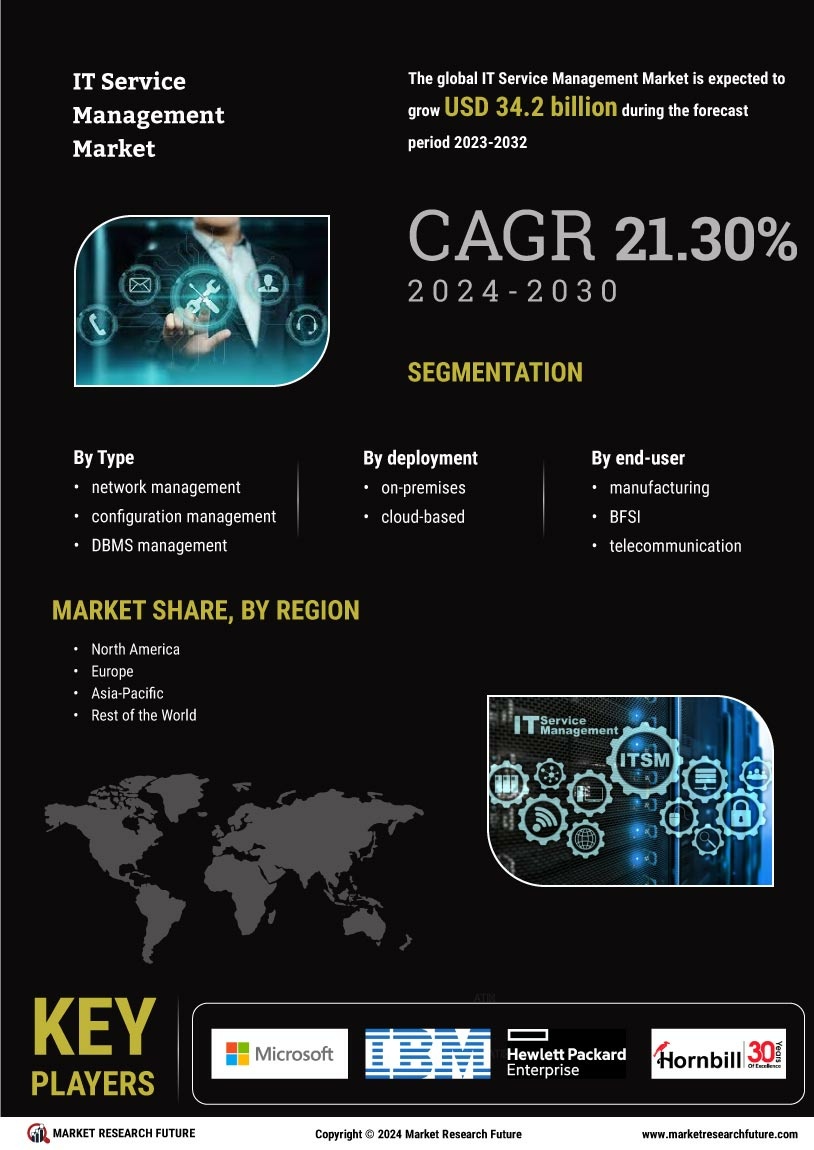
The IT Service Management Market is experiencing strong growth as enterprises seek smarter ways to manage IT support, improve service workflows, and reduce operational downtime. Modern organizations are heavily dependent on IT infrastructure, digital tools, and cloud applications, making IT service continuity a critical business requirement. As businesses expand their digital ecosystems, ITSM platforms are becoming essential for ensuring consistent performance, faster response times, and enhanced user satisfaction.
IT service management is a structured approach that allows IT teams to deliver IT services effectively using standardized processes. These processes include incident management, problem management, change management, service request management, and configuration management. Traditionally, IT support teams handled requests manually, which often resulted in delays, inconsistent service quality, and poor resource utilization. Today, ITSM solutions provide automated ticketing, intelligent workflows, and self-service capabilities that significantly improve service efficiency.
One of the primary factors driving ITSM adoption is the rising need for operational efficiency. Businesses want IT teams to deliver faster support with fewer resources. ITSM platforms help by automating repetitive tasks such as ticket categorization, escalation routing, and system monitoring alerts. Automation ensures that service requests are handled consistently and without delays. This reduces pressure on IT staff while improving overall response performance.
Another important growth driver is the increasing complexity of enterprise IT environments. Organizations are using a combination of cloud services, SaaS applications, on-premise servers, mobile devices, and IoT-enabled systems. Managing these diverse environments is difficult without a centralized IT service management system. ITSM tools provide a single platform for managing service requests, tracking incidents, and monitoring assets. This centralized visibility allows IT leaders to identify performance bottlenecks and improve service delivery.
The integration of AI and machine learning is reshaping the ITSM landscape. AI-based ITSM platforms can predict issues before they occur by analyzing historical ticket trends and system performance data. Predictive maintenance reduces downtime and prevents service interruptions. AI-driven chatbots also support end-users by answering common questions, providing troubleshooting steps, and generating support tickets automatically. These features improve user experience while reducing IT workload.
Cloud-based ITSM deployment is becoming the preferred model for many businesses. Cloud ITSM solutions provide scalability, easy upgrades, and reduced infrastructure management costs. Organizations can quickly expand or shrink their ITSM resources depending on business demand. Cloud-based platforms also allow remote teams to access service tools from anywhere, which is especially important in the post-pandemic remote work environment. Vendors are increasingly offering multi-tenant SaaS solutions that enable faster implementation and lower upfront investments.
@https://www.marketresearchfuture.com/reports/it-service-management-market-932
IT service management is a structured approach that allows IT teams to deliver IT services effectively using standardized processes. These processes include incident management, problem management, change management, service request management, and configuration management. Traditionally, IT support teams handled requests manually, which often resulted in delays, inconsistent service quality, and poor resource utilization. Today, ITSM solutions provide automated ticketing, intelligent workflows, and self-service capabilities that significantly improve service efficiency.
One of the primary factors driving ITSM adoption is the rising need for operational efficiency. Businesses want IT teams to deliver faster support with fewer resources. ITSM platforms help by automating repetitive tasks such as ticket categorization, escalation routing, and system monitoring alerts. Automation ensures that service requests are handled consistently and without delays. This reduces pressure on IT staff while improving overall response performance.
Another important growth driver is the increasing complexity of enterprise IT environments. Organizations are using a combination of cloud services, SaaS applications, on-premise servers, mobile devices, and IoT-enabled systems. Managing these diverse environments is difficult without a centralized IT service management system. ITSM tools provide a single platform for managing service requests, tracking incidents, and monitoring assets. This centralized visibility allows IT leaders to identify performance bottlenecks and improve service delivery.
The integration of AI and machine learning is reshaping the ITSM landscape. AI-based ITSM platforms can predict issues before they occur by analyzing historical ticket trends and system performance data. Predictive maintenance reduces downtime and prevents service interruptions. AI-driven chatbots also support end-users by answering common questions, providing troubleshooting steps, and generating support tickets automatically. These features improve user experience while reducing IT workload.
Cloud-based ITSM deployment is becoming the preferred model for many businesses. Cloud ITSM solutions provide scalability, easy upgrades, and reduced infrastructure management costs. Organizations can quickly expand or shrink their ITSM resources depending on business demand. Cloud-based platforms also allow remote teams to access service tools from anywhere, which is especially important in the post-pandemic remote work environment. Vendors are increasingly offering multi-tenant SaaS solutions that enable faster implementation and lower upfront investments.
@https://www.marketresearchfuture.com/reports/it-service-management-market-932
The IT Service Management Market is experiencing strong growth as enterprises seek smarter ways to manage IT support, improve service workflows, and reduce operational downtime. Modern organizations are heavily dependent on IT infrastructure, digital tools, and cloud applications, making IT service continuity a critical business requirement. As businesses expand their digital ecosystems, ITSM platforms are becoming essential for ensuring consistent performance, faster response times, and enhanced user satisfaction.
IT service management is a structured approach that allows IT teams to deliver IT services effectively using standardized processes. These processes include incident management, problem management, change management, service request management, and configuration management. Traditionally, IT support teams handled requests manually, which often resulted in delays, inconsistent service quality, and poor resource utilization. Today, ITSM solutions provide automated ticketing, intelligent workflows, and self-service capabilities that significantly improve service efficiency.
One of the primary factors driving ITSM adoption is the rising need for operational efficiency. Businesses want IT teams to deliver faster support with fewer resources. ITSM platforms help by automating repetitive tasks such as ticket categorization, escalation routing, and system monitoring alerts. Automation ensures that service requests are handled consistently and without delays. This reduces pressure on IT staff while improving overall response performance.
Another important growth driver is the increasing complexity of enterprise IT environments. Organizations are using a combination of cloud services, SaaS applications, on-premise servers, mobile devices, and IoT-enabled systems. Managing these diverse environments is difficult without a centralized IT service management system. ITSM tools provide a single platform for managing service requests, tracking incidents, and monitoring assets. This centralized visibility allows IT leaders to identify performance bottlenecks and improve service delivery.
The integration of AI and machine learning is reshaping the ITSM landscape. AI-based ITSM platforms can predict issues before they occur by analyzing historical ticket trends and system performance data. Predictive maintenance reduces downtime and prevents service interruptions. AI-driven chatbots also support end-users by answering common questions, providing troubleshooting steps, and generating support tickets automatically. These features improve user experience while reducing IT workload.
Cloud-based ITSM deployment is becoming the preferred model for many businesses. Cloud ITSM solutions provide scalability, easy upgrades, and reduced infrastructure management costs. Organizations can quickly expand or shrink their ITSM resources depending on business demand. Cloud-based platforms also allow remote teams to access service tools from anywhere, which is especially important in the post-pandemic remote work environment. Vendors are increasingly offering multi-tenant SaaS solutions that enable faster implementation and lower upfront investments.
@https://www.marketresearchfuture.com/reports/it-service-management-market-932
0 Comentários
0 Compartilhamentos
446 Visualizações
0 Anterior


 English
 Arabic
 French
 Spanish
 Deutsch
 Turkish
 Dutch
Dutch
 Italiano
 Russian
 Romaian
 Portuguese (Brazil)
 Greek
Greek