
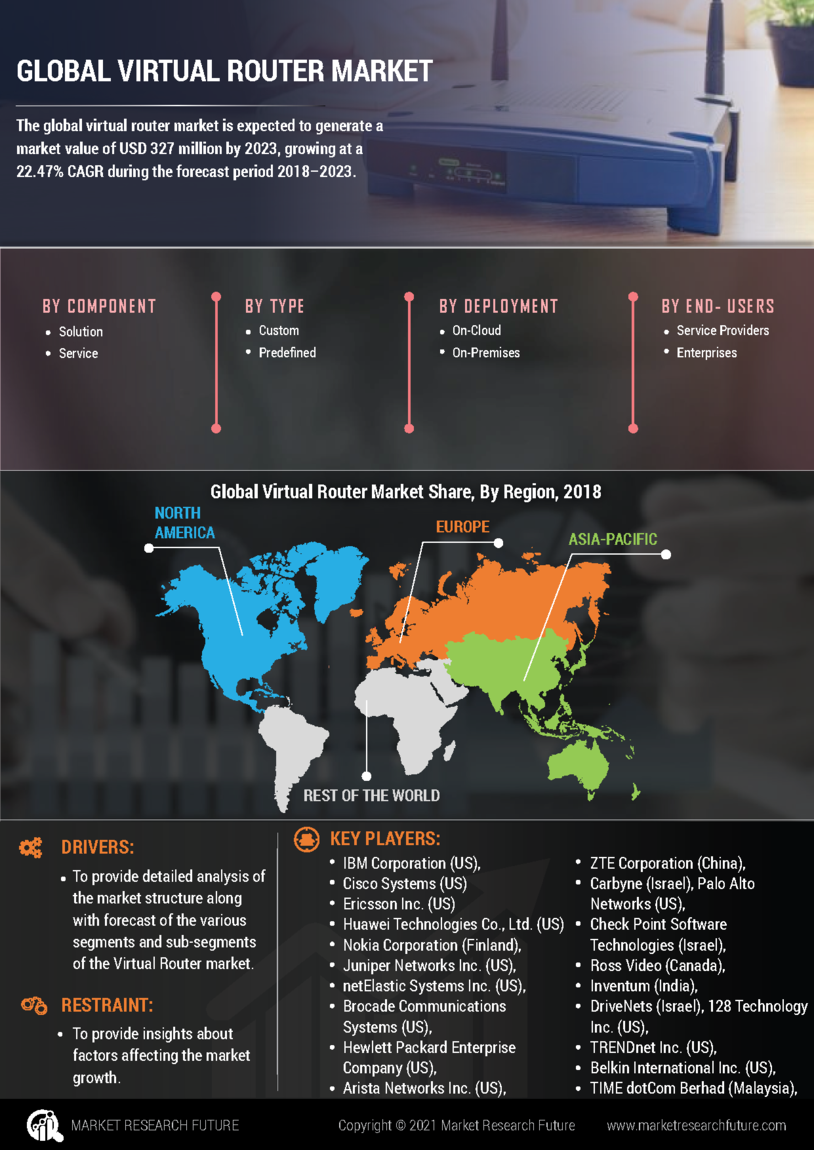
The Virtual Router Market is gaining traction as businesses seek cost-effective alternatives to hardware-based networking solutions. Virtual routers reduce infrastructure expenses by operating on commodity hardware and cloud platforms.
Operational agility is a primary advantage. Virtual routers can be deployed within minutes, eliminating lengthy procurement and installation cycles. Businesses can quickly adapt network configurations to changing operational requirements.
Automation reduces administrative workload. With programmable interfaces, virtual routers enable policy-based routing adjustments without manual intervention.
Energy efficiency further enhances cost savings. Eliminating dedicated hardware reduces power consumption and physical space requirements in data centers.
SMEs particularly benefit from subscription-based pricing models, allowing access to enterprise-grade routing capabilities without significant upfront investment.
The ongoing shift toward software-defined infrastructure ensures sustained market demand for virtual routing solutions.
@https://www.marketresearchfuture.com/reports/virtual-router-market-6711
Operational agility is a primary advantage. Virtual routers can be deployed within minutes, eliminating lengthy procurement and installation cycles. Businesses can quickly adapt network configurations to changing operational requirements.
Automation reduces administrative workload. With programmable interfaces, virtual routers enable policy-based routing adjustments without manual intervention.
Energy efficiency further enhances cost savings. Eliminating dedicated hardware reduces power consumption and physical space requirements in data centers.
SMEs particularly benefit from subscription-based pricing models, allowing access to enterprise-grade routing capabilities without significant upfront investment.
The ongoing shift toward software-defined infrastructure ensures sustained market demand for virtual routing solutions.
@https://www.marketresearchfuture.com/reports/virtual-router-market-6711
The Virtual Router Market is gaining traction as businesses seek cost-effective alternatives to hardware-based networking solutions. Virtual routers reduce infrastructure expenses by operating on commodity hardware and cloud platforms.
Operational agility is a primary advantage. Virtual routers can be deployed within minutes, eliminating lengthy procurement and installation cycles. Businesses can quickly adapt network configurations to changing operational requirements.
Automation reduces administrative workload. With programmable interfaces, virtual routers enable policy-based routing adjustments without manual intervention.
Energy efficiency further enhances cost savings. Eliminating dedicated hardware reduces power consumption and physical space requirements in data centers.
SMEs particularly benefit from subscription-based pricing models, allowing access to enterprise-grade routing capabilities without significant upfront investment.
The ongoing shift toward software-defined infrastructure ensures sustained market demand for virtual routing solutions.
@https://www.marketresearchfuture.com/reports/virtual-router-market-6711
0 Comments
0 Shares
280 Views
0 Reviews

 Arabic
 French
 Spanish
 Portuguese
 Deutsch
 Turkish
 Dutch
Dutch
 Italiano
 Russian
 Romaian
 Portuguese (Brazil)
 Greek
Greek