
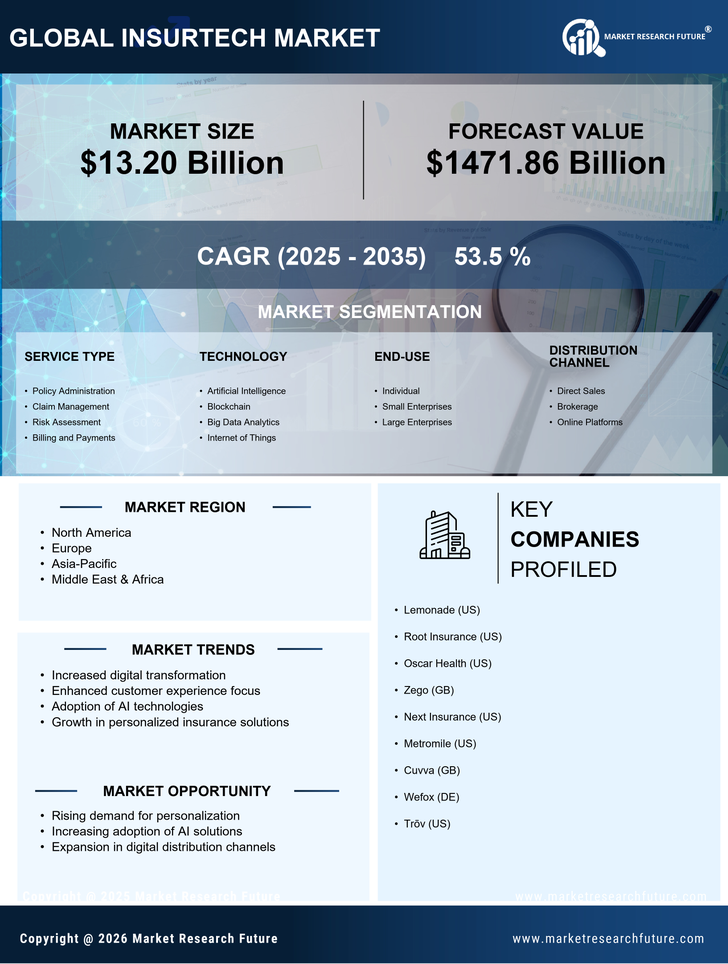
The Insurtech Market is witnessing significant trends that are shaping its future. One of the most notable trends is the integration of artificial intelligence (AI) into various insurance processes. AI is being used for risk assessment, underwriting, and claims management, allowing companies to make data-driven decisions and improve operational efficiency. Additionally, the rise of on-demand insurance is changing how consumers purchase coverage, offering flexibility and convenience.
On-demand insurance, also known as microinsurance, allows consumers to purchase coverage for specific events or timeframes rather than committing to long-term policies. This trend is particularly appealing to younger consumers who prefer customizable solutions that align with their lifestyles. For instance, travelers can purchase insurance coverage for the duration of their trip, while gig economy workers can opt for insurance that covers them only when they are actively working. This flexibility not only meets consumer demands but also reduces the risk for insurers by aligning coverage with actual usage.
Another significant trend in the insurtech market is the increasing adoption of Internet of Things (IoT) technology. IoT devices, such as smart home systems, telematics devices in vehicles, and wearable health monitors, are providing insurers with real-time data that can be used to assess risk more accurately. For example, telematics devices can track driving behavior, allowing insurers to offer personalized auto insurance premiums based on individual driving habits. Similarly, health insurers can use data from wearable devices to encourage healthier behaviors and potentially lower premiums for policyholders who meet specific health metrics.
The shift towards digital platforms is also transforming how insurance products are marketed and sold. Insurtech companies are leveraging social media, online advertising, and influencer partnerships to reach potential customers more effectively. This digital-first approach allows insurers to engage with consumers where they are spending their time, making it easier to educate them about available products and services. Additionally, the use of customer relationship management (CRM) tools enables insurtech firms to track customer interactions and tailor their marketing strategies accordingly.@https://www.marketresearchfuture.com/reports/insurtech-market-11712
On-demand insurance, also known as microinsurance, allows consumers to purchase coverage for specific events or timeframes rather than committing to long-term policies. This trend is particularly appealing to younger consumers who prefer customizable solutions that align with their lifestyles. For instance, travelers can purchase insurance coverage for the duration of their trip, while gig economy workers can opt for insurance that covers them only when they are actively working. This flexibility not only meets consumer demands but also reduces the risk for insurers by aligning coverage with actual usage.
Another significant trend in the insurtech market is the increasing adoption of Internet of Things (IoT) technology. IoT devices, such as smart home systems, telematics devices in vehicles, and wearable health monitors, are providing insurers with real-time data that can be used to assess risk more accurately. For example, telematics devices can track driving behavior, allowing insurers to offer personalized auto insurance premiums based on individual driving habits. Similarly, health insurers can use data from wearable devices to encourage healthier behaviors and potentially lower premiums for policyholders who meet specific health metrics.
The shift towards digital platforms is also transforming how insurance products are marketed and sold. Insurtech companies are leveraging social media, online advertising, and influencer partnerships to reach potential customers more effectively. This digital-first approach allows insurers to engage with consumers where they are spending their time, making it easier to educate them about available products and services. Additionally, the use of customer relationship management (CRM) tools enables insurtech firms to track customer interactions and tailor their marketing strategies accordingly.@https://www.marketresearchfuture.com/reports/insurtech-market-11712
The Insurtech Market is witnessing significant trends that are shaping its future. One of the most notable trends is the integration of artificial intelligence (AI) into various insurance processes. AI is being used for risk assessment, underwriting, and claims management, allowing companies to make data-driven decisions and improve operational efficiency. Additionally, the rise of on-demand insurance is changing how consumers purchase coverage, offering flexibility and convenience.
On-demand insurance, also known as microinsurance, allows consumers to purchase coverage for specific events or timeframes rather than committing to long-term policies. This trend is particularly appealing to younger consumers who prefer customizable solutions that align with their lifestyles. For instance, travelers can purchase insurance coverage for the duration of their trip, while gig economy workers can opt for insurance that covers them only when they are actively working. This flexibility not only meets consumer demands but also reduces the risk for insurers by aligning coverage with actual usage.
Another significant trend in the insurtech market is the increasing adoption of Internet of Things (IoT) technology. IoT devices, such as smart home systems, telematics devices in vehicles, and wearable health monitors, are providing insurers with real-time data that can be used to assess risk more accurately. For example, telematics devices can track driving behavior, allowing insurers to offer personalized auto insurance premiums based on individual driving habits. Similarly, health insurers can use data from wearable devices to encourage healthier behaviors and potentially lower premiums for policyholders who meet specific health metrics.
The shift towards digital platforms is also transforming how insurance products are marketed and sold. Insurtech companies are leveraging social media, online advertising, and influencer partnerships to reach potential customers more effectively. This digital-first approach allows insurers to engage with consumers where they are spending their time, making it easier to educate them about available products and services. Additionally, the use of customer relationship management (CRM) tools enables insurtech firms to track customer interactions and tailor their marketing strategies accordingly.@https://www.marketresearchfuture.com/reports/insurtech-market-11712
0 Commenti
0 condivisioni
380 Views
0 Anteprima

 English
 Arabic
 French
 Spanish
 Portuguese
 Deutsch
 Turkish
 Dutch
Dutch
 Russian
 Romaian
 Portuguese (Brazil)
 Greek
Greek