
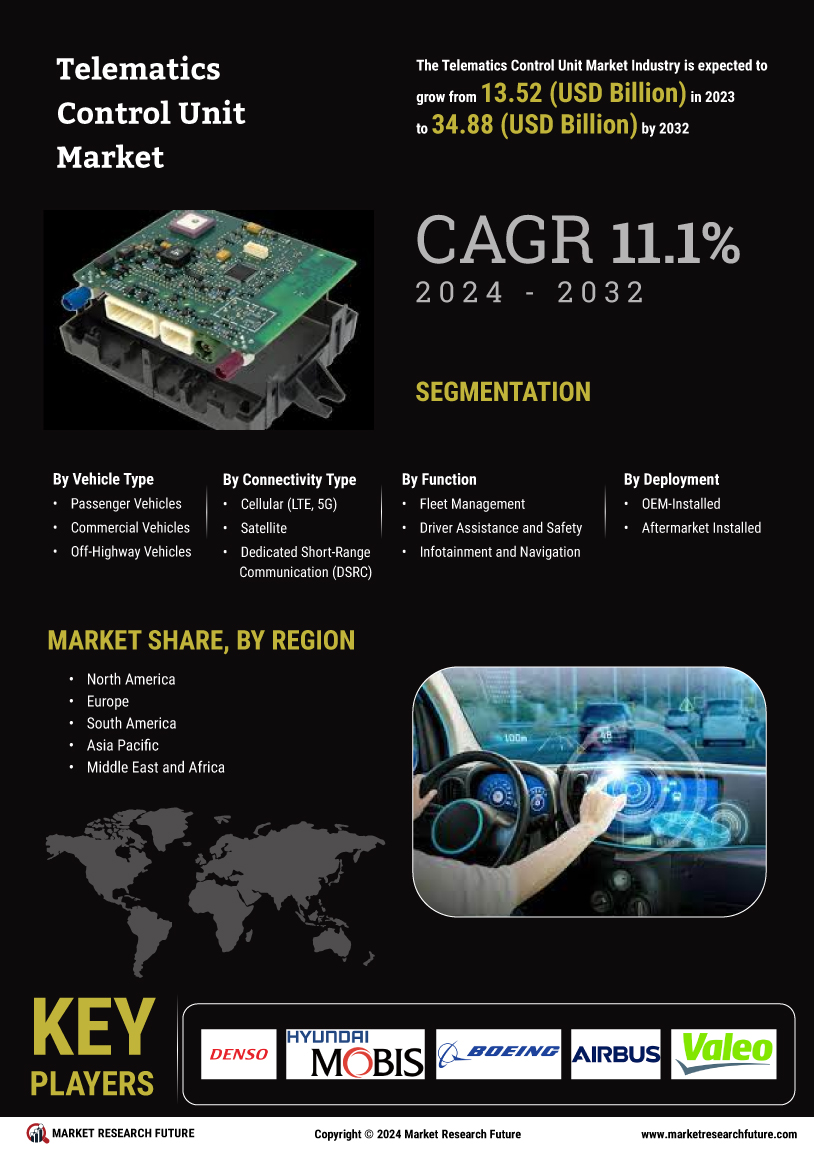
The Telematics Control Unit Market is growing rapidly due to the increasing demand for connected vehicle solutions and real-time automotive data services. Telematics control units have become critical components in modern vehicles, allowing seamless communication between vehicles, cloud platforms, and external networks. The primary growth driver is the rising adoption of connected car technologies, as consumers increasingly expect vehicles to offer smartphone-like features such as real-time navigation, remote monitoring, infotainment access, and wireless updates. Automakers are responding by embedding telematics solutions into new vehicle models, ensuring connectivity becomes a standard feature rather than an optional upgrade.
One of the strongest drivers of the market is the global emphasis on vehicle safety. Governments and regulatory bodies are implementing strict safety regulations, requiring features such as emergency call systems, accident alerts, and real-time vehicle monitoring. Telematics systems enable automatic emergency response by transmitting vehicle location and crash data to emergency services. This reduces response times and improves passenger safety. Many regions have made such features mandatory, increasing the demand for embedded telematics control units in both passenger and commercial vehicles.
Fleet management is another significant factor supporting market growth. Commercial fleet operators are adopting telematics solutions to monitor vehicle performance, reduce fuel consumption, optimize routes, and improve driver safety. Fleet managers use real-time telematics data to track delivery vehicles, manage driver behavior, and minimize downtime. As logistics, transportation, and e-commerce industries expand worldwide, fleet telematics adoption continues to rise. The growth of last-mile delivery services further strengthens the need for telematics solutions, as companies require accurate tracking and efficient dispatch management.
Electric vehicle adoption is also accelerating demand for telematics control units. EVs require advanced monitoring systems to track battery health, charging performance, and vehicle efficiency. Telematics enables remote access to battery status, charging schedules, and energy consumption analytics. EV manufacturers are also using telematics to enhance customer experience through mobile applications that provide remote vehicle control and charging station guidance. With EV sales increasing globally, the demand for TCUs in electric mobility platforms is expected to rise significantly.
The development of 5G networks is another powerful market driver. 5G connectivity offers higher bandwidth, ultra-low latency, and improved network reliability. This enables advanced applications such as vehicle-to-vehicle communication, vehicle-to-infrastructure integration, and real-time traffic management. With the rise of autonomous driving development, 5G-enabled telematics will become essential. Automakers are investing in advanced telematics units capable of supporting next-generation mobility applications.@https://www.marketresearchfuture.com/reports/telematics-control-unit-market-22289
One of the strongest drivers of the market is the global emphasis on vehicle safety. Governments and regulatory bodies are implementing strict safety regulations, requiring features such as emergency call systems, accident alerts, and real-time vehicle monitoring. Telematics systems enable automatic emergency response by transmitting vehicle location and crash data to emergency services. This reduces response times and improves passenger safety. Many regions have made such features mandatory, increasing the demand for embedded telematics control units in both passenger and commercial vehicles.
Fleet management is another significant factor supporting market growth. Commercial fleet operators are adopting telematics solutions to monitor vehicle performance, reduce fuel consumption, optimize routes, and improve driver safety. Fleet managers use real-time telematics data to track delivery vehicles, manage driver behavior, and minimize downtime. As logistics, transportation, and e-commerce industries expand worldwide, fleet telematics adoption continues to rise. The growth of last-mile delivery services further strengthens the need for telematics solutions, as companies require accurate tracking and efficient dispatch management.
Electric vehicle adoption is also accelerating demand for telematics control units. EVs require advanced monitoring systems to track battery health, charging performance, and vehicle efficiency. Telematics enables remote access to battery status, charging schedules, and energy consumption analytics. EV manufacturers are also using telematics to enhance customer experience through mobile applications that provide remote vehicle control and charging station guidance. With EV sales increasing globally, the demand for TCUs in electric mobility platforms is expected to rise significantly.
The development of 5G networks is another powerful market driver. 5G connectivity offers higher bandwidth, ultra-low latency, and improved network reliability. This enables advanced applications such as vehicle-to-vehicle communication, vehicle-to-infrastructure integration, and real-time traffic management. With the rise of autonomous driving development, 5G-enabled telematics will become essential. Automakers are investing in advanced telematics units capable of supporting next-generation mobility applications.@https://www.marketresearchfuture.com/reports/telematics-control-unit-market-22289
The Telematics Control Unit Market is growing rapidly due to the increasing demand for connected vehicle solutions and real-time automotive data services. Telematics control units have become critical components in modern vehicles, allowing seamless communication between vehicles, cloud platforms, and external networks. The primary growth driver is the rising adoption of connected car technologies, as consumers increasingly expect vehicles to offer smartphone-like features such as real-time navigation, remote monitoring, infotainment access, and wireless updates. Automakers are responding by embedding telematics solutions into new vehicle models, ensuring connectivity becomes a standard feature rather than an optional upgrade.
One of the strongest drivers of the market is the global emphasis on vehicle safety. Governments and regulatory bodies are implementing strict safety regulations, requiring features such as emergency call systems, accident alerts, and real-time vehicle monitoring. Telematics systems enable automatic emergency response by transmitting vehicle location and crash data to emergency services. This reduces response times and improves passenger safety. Many regions have made such features mandatory, increasing the demand for embedded telematics control units in both passenger and commercial vehicles.
Fleet management is another significant factor supporting market growth. Commercial fleet operators are adopting telematics solutions to monitor vehicle performance, reduce fuel consumption, optimize routes, and improve driver safety. Fleet managers use real-time telematics data to track delivery vehicles, manage driver behavior, and minimize downtime. As logistics, transportation, and e-commerce industries expand worldwide, fleet telematics adoption continues to rise. The growth of last-mile delivery services further strengthens the need for telematics solutions, as companies require accurate tracking and efficient dispatch management.
Electric vehicle adoption is also accelerating demand for telematics control units. EVs require advanced monitoring systems to track battery health, charging performance, and vehicle efficiency. Telematics enables remote access to battery status, charging schedules, and energy consumption analytics. EV manufacturers are also using telematics to enhance customer experience through mobile applications that provide remote vehicle control and charging station guidance. With EV sales increasing globally, the demand for TCUs in electric mobility platforms is expected to rise significantly.
The development of 5G networks is another powerful market driver. 5G connectivity offers higher bandwidth, ultra-low latency, and improved network reliability. This enables advanced applications such as vehicle-to-vehicle communication, vehicle-to-infrastructure integration, and real-time traffic management. With the rise of autonomous driving development, 5G-enabled telematics will become essential. Automakers are investing in advanced telematics units capable of supporting next-generation mobility applications.@https://www.marketresearchfuture.com/reports/telematics-control-unit-market-22289
0 Commentarii
0 Distribuiri
392 Views
0 previzualizare

 English
 Arabic
 French
 Spanish
 Portuguese
 Deutsch
 Turkish
 Dutch
Dutch
 Italiano
 Russian
 Portuguese (Brazil)
 Greek
Greek