
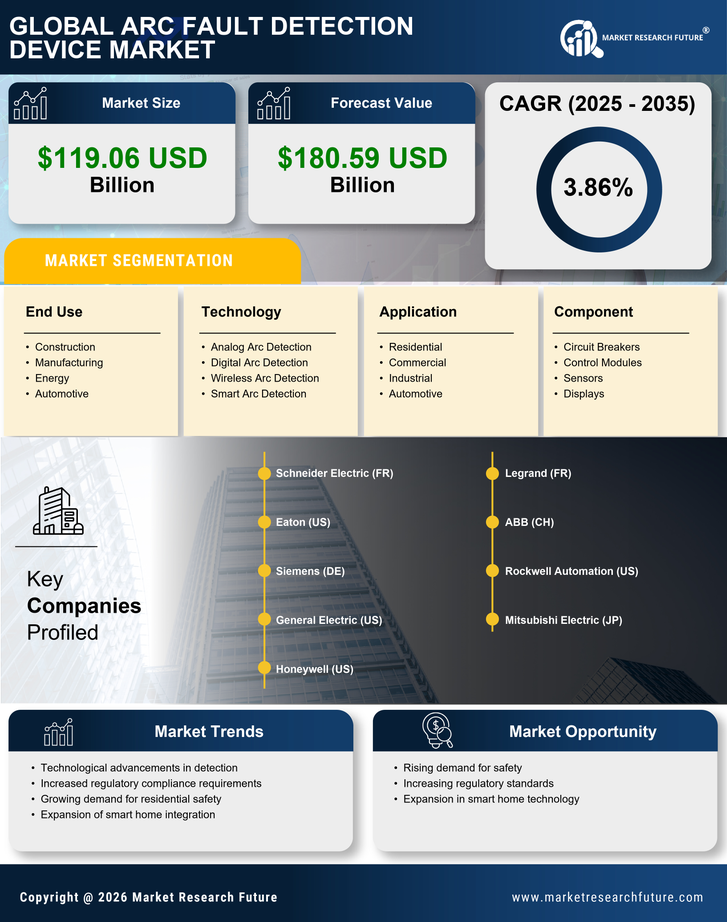
The Arc Fault Detection Device Market is emerging as one of the most crucial segments of the electrical safety industry due to the increasing focus on modern power distribution systems. Electrical arcs are unpredictable and can occur due to damaged insulation, loose connections, or worn-out wiring. If left undetected, these arcs may cause overheating, equipment damage, and severe electrical fires. Arc fault detection devices are designed to monitor electrical current patterns and quickly identify dangerous arc faults. With the growing dependence on electricity across residential, commercial, and industrial sectors, the need for advanced protection systems has become a priority, strengthening market demand globally.
A key market driver is the expansion of smart infrastructure projects worldwide. Governments and private developers are investing heavily in smart cities, smart grids, and intelligent building systems. Arc fault detection devices align perfectly with these initiatives because they can be integrated into automated electrical networks. Modern devices can send alerts, provide fault data, and support real-time monitoring, enabling quick preventive action. This feature is becoming highly valuable for commercial and industrial buildings where electrical safety is directly linked to operational efficiency.
The growing adoption of electric vehicles is also contributing to the market’s growth. EV charging infrastructure requires robust electrical protection because high-voltage charging systems are more prone to faults and overheating risks. Arc fault detection devices are increasingly being installed in EV charging stations to prevent accidents and maintain stable power flow. As EV adoption rises globally, the need for safe and efficient charging infrastructure is expected to generate significant demand for arc fault detection devices.
Another major growth factor is the modernization of aging electrical infrastructure. In many developed countries, old residential buildings and industrial plants have outdated wiring systems that increase the risk of arc faults. Upgrading these infrastructures with arc fault detection technology is becoming common, particularly in regions with strict safety laws. Retrofitting older buildings with advanced electrical protection devices is expected to create strong market opportunities for manufacturers.
The industrial segment remains a strong contributor to the market. Industries such as oil & gas, chemical processing, mining, and heavy manufacturing deal with high electrical loads and complex wiring networks. Even minor electrical faults in these sectors can lead to major disruptions, equipment failure, and safety hazards. Arc fault detection devices help reduce these risks by quickly detecting abnormal current behavior and disconnecting the circuit before damage occurs. This makes them essential for industrial safety compliance and operational reliability.
Technological innovation is reshaping the competitive landscape. Manufacturers are introducing arc fault detection devices with advanced digital features, such as self-testing mechanisms, improved fault discrimination, and enhanced sensitivity. Some products now include wireless connectivity and cloud-based monitoring, allowing remote access to electrical fault data. These innovations are making arc fault detection devices more effective and attractive for modern applications.
@https://www.marketresearchfuture.com/reports/arc-fault-detection-device-market-35323
A key market driver is the expansion of smart infrastructure projects worldwide. Governments and private developers are investing heavily in smart cities, smart grids, and intelligent building systems. Arc fault detection devices align perfectly with these initiatives because they can be integrated into automated electrical networks. Modern devices can send alerts, provide fault data, and support real-time monitoring, enabling quick preventive action. This feature is becoming highly valuable for commercial and industrial buildings where electrical safety is directly linked to operational efficiency.
The growing adoption of electric vehicles is also contributing to the market’s growth. EV charging infrastructure requires robust electrical protection because high-voltage charging systems are more prone to faults and overheating risks. Arc fault detection devices are increasingly being installed in EV charging stations to prevent accidents and maintain stable power flow. As EV adoption rises globally, the need for safe and efficient charging infrastructure is expected to generate significant demand for arc fault detection devices.
Another major growth factor is the modernization of aging electrical infrastructure. In many developed countries, old residential buildings and industrial plants have outdated wiring systems that increase the risk of arc faults. Upgrading these infrastructures with arc fault detection technology is becoming common, particularly in regions with strict safety laws. Retrofitting older buildings with advanced electrical protection devices is expected to create strong market opportunities for manufacturers.
The industrial segment remains a strong contributor to the market. Industries such as oil & gas, chemical processing, mining, and heavy manufacturing deal with high electrical loads and complex wiring networks. Even minor electrical faults in these sectors can lead to major disruptions, equipment failure, and safety hazards. Arc fault detection devices help reduce these risks by quickly detecting abnormal current behavior and disconnecting the circuit before damage occurs. This makes them essential for industrial safety compliance and operational reliability.
Technological innovation is reshaping the competitive landscape. Manufacturers are introducing arc fault detection devices with advanced digital features, such as self-testing mechanisms, improved fault discrimination, and enhanced sensitivity. Some products now include wireless connectivity and cloud-based monitoring, allowing remote access to electrical fault data. These innovations are making arc fault detection devices more effective and attractive for modern applications.
@https://www.marketresearchfuture.com/reports/arc-fault-detection-device-market-35323
The Arc Fault Detection Device Market is emerging as one of the most crucial segments of the electrical safety industry due to the increasing focus on modern power distribution systems. Electrical arcs are unpredictable and can occur due to damaged insulation, loose connections, or worn-out wiring. If left undetected, these arcs may cause overheating, equipment damage, and severe electrical fires. Arc fault detection devices are designed to monitor electrical current patterns and quickly identify dangerous arc faults. With the growing dependence on electricity across residential, commercial, and industrial sectors, the need for advanced protection systems has become a priority, strengthening market demand globally.
A key market driver is the expansion of smart infrastructure projects worldwide. Governments and private developers are investing heavily in smart cities, smart grids, and intelligent building systems. Arc fault detection devices align perfectly with these initiatives because they can be integrated into automated electrical networks. Modern devices can send alerts, provide fault data, and support real-time monitoring, enabling quick preventive action. This feature is becoming highly valuable for commercial and industrial buildings where electrical safety is directly linked to operational efficiency.
The growing adoption of electric vehicles is also contributing to the market’s growth. EV charging infrastructure requires robust electrical protection because high-voltage charging systems are more prone to faults and overheating risks. Arc fault detection devices are increasingly being installed in EV charging stations to prevent accidents and maintain stable power flow. As EV adoption rises globally, the need for safe and efficient charging infrastructure is expected to generate significant demand for arc fault detection devices.
Another major growth factor is the modernization of aging electrical infrastructure. In many developed countries, old residential buildings and industrial plants have outdated wiring systems that increase the risk of arc faults. Upgrading these infrastructures with arc fault detection technology is becoming common, particularly in regions with strict safety laws. Retrofitting older buildings with advanced electrical protection devices is expected to create strong market opportunities for manufacturers.
The industrial segment remains a strong contributor to the market. Industries such as oil & gas, chemical processing, mining, and heavy manufacturing deal with high electrical loads and complex wiring networks. Even minor electrical faults in these sectors can lead to major disruptions, equipment failure, and safety hazards. Arc fault detection devices help reduce these risks by quickly detecting abnormal current behavior and disconnecting the circuit before damage occurs. This makes them essential for industrial safety compliance and operational reliability.
Technological innovation is reshaping the competitive landscape. Manufacturers are introducing arc fault detection devices with advanced digital features, such as self-testing mechanisms, improved fault discrimination, and enhanced sensitivity. Some products now include wireless connectivity and cloud-based monitoring, allowing remote access to electrical fault data. These innovations are making arc fault detection devices more effective and attractive for modern applications.
@https://www.marketresearchfuture.com/reports/arc-fault-detection-device-market-35323
0 التعليقات
0 المشاركات
383 مشاهدة
0 معاينة

 English
 French
 Spanish
 Portuguese
 Deutsch
 Turkish
 Dutch
Dutch
 Italiano
 Russian
 Romaian
 Portuguese (Brazil)
 Greek
Greek