

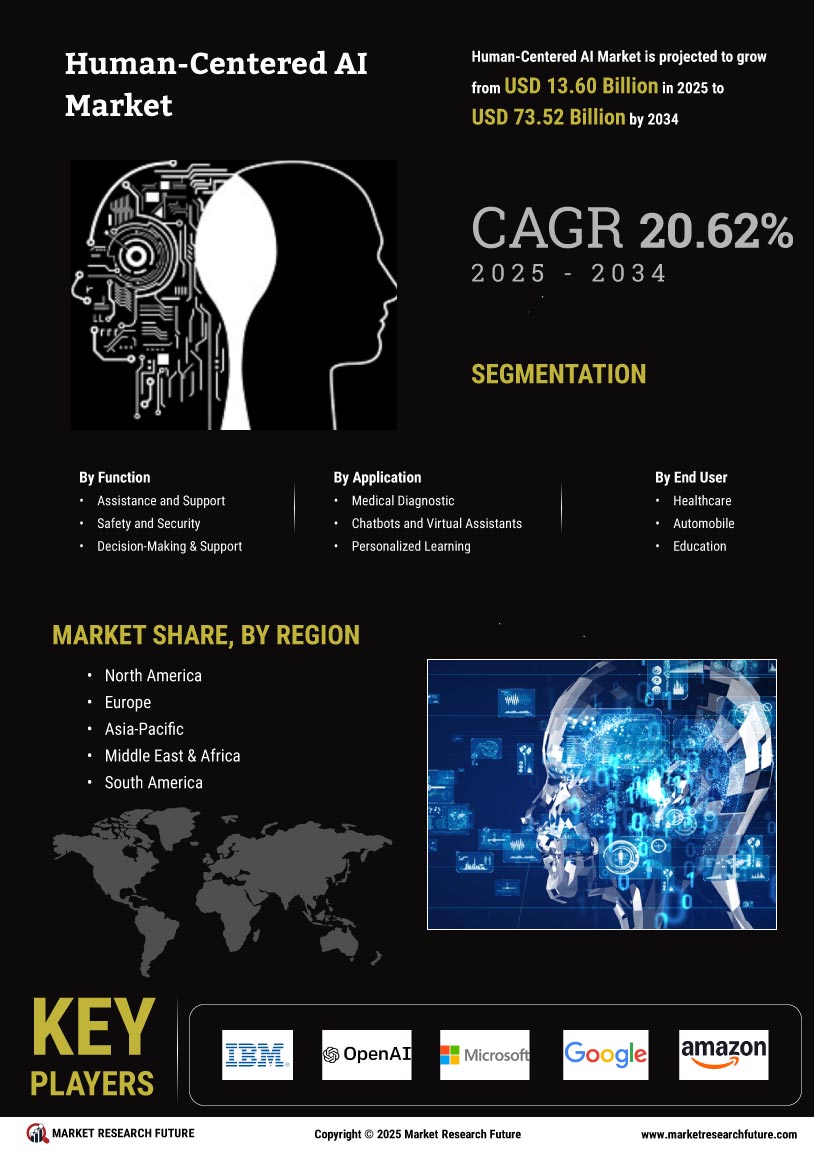
The Human-Centered AI Market is experiencing rapid growth as organizations across diverse sectors recognize the strategic importance of integrating artificial intelligence solutions that complement human judgment and expertise. By focusing on usability, transparency, and ethical design, human-centered AI (HCAI) is transforming industries from healthcare to finance, manufacturing to education, and government services — enabling more responsive, trustworthy, and inclusive digital ecosystems. This article explores how different industries are adopting HCAI, the benefits realized, and the challenges that must be addressed to sustain growth in this evolving market.
Healthcare represents one of the most dynamic segments within the human-centered AI market. With increasing demand for efficiency and accuracy in diagnosis and patient care, medical institutions are leveraging AI tools to augment clinical workflows. For instance, diagnostic support systems use machine learning to analyze medical images and highlight anomalies for radiologists to review. These systems are designed to provide explainable outputs, enabling clinicians to audit AI recommendations and align them with their professional judgment. As a result, patient outcomes improve without diminishing clinician authority or responsibility, reinforcing the collaborative value of HCAI.
The financial sector has also turned to human-centered AI to enhance decision-making and customer service. Banks and financial services firms deploy AI-driven tools to detect fraudulent activity, assess creditworthiness, and personalize investment advice. Crucially, these systems incorporate interfaces that explain how decisions are made — offering transparency to both regulators and consumers. This level of clarity helps institutions comply with stringent regulatory standards while building customer trust, which is indispensable in sectors where perceived fairness can influence market participation and reputation.
Manufacturing and supply chain management are undergoing digital transformation with the help of human-centered AI. Predictive maintenance systems analyze sensor data from machinery to anticipate equipment failures before they occur — reducing downtime and optimizing maintenance schedules. Importantly, these systems present insights in intuitive dashboards that operators and engineers can understand and act upon. By keeping humans in the loop, organizations minimize errors and leverage the domain expertise of their workforce to optimize production processes effectively.
In education, human-centered AI supports personalized learning experiences while maintaining the central role of educators. Intelligent tutoring systems adapt to individual student learning paths, offering recommendations and feedback that align with students’ strengths and areas for improvement. Teachers can use analytics from these systems to inform instruction, intervene when necessary, and tailor lessons to diverse learning needs. This balanced partnership enhances educational effectiveness while preserving teacher autonomy.
Government agencies are also exploring human-centered AI applications to improve public services. Chatbots and virtual assistants powered by AI help citizens access information and complete routine tasks efficiently. These systems are designed to understand natural language and offer clarifications, making them accessible to users with varying levels of digital literacy. By focusing on user experience and inclusivity, public sector organizations can improve service delivery and reduce administrative burdens while ensuring that citizens feel supported and heard.
@https://www.marketresearchfuture.com/reports/human-centered-ai-market-12225
Healthcare represents one of the most dynamic segments within the human-centered AI market. With increasing demand for efficiency and accuracy in diagnosis and patient care, medical institutions are leveraging AI tools to augment clinical workflows. For instance, diagnostic support systems use machine learning to analyze medical images and highlight anomalies for radiologists to review. These systems are designed to provide explainable outputs, enabling clinicians to audit AI recommendations and align them with their professional judgment. As a result, patient outcomes improve without diminishing clinician authority or responsibility, reinforcing the collaborative value of HCAI.
The financial sector has also turned to human-centered AI to enhance decision-making and customer service. Banks and financial services firms deploy AI-driven tools to detect fraudulent activity, assess creditworthiness, and personalize investment advice. Crucially, these systems incorporate interfaces that explain how decisions are made — offering transparency to both regulators and consumers. This level of clarity helps institutions comply with stringent regulatory standards while building customer trust, which is indispensable in sectors where perceived fairness can influence market participation and reputation.
Manufacturing and supply chain management are undergoing digital transformation with the help of human-centered AI. Predictive maintenance systems analyze sensor data from machinery to anticipate equipment failures before they occur — reducing downtime and optimizing maintenance schedules. Importantly, these systems present insights in intuitive dashboards that operators and engineers can understand and act upon. By keeping humans in the loop, organizations minimize errors and leverage the domain expertise of their workforce to optimize production processes effectively.
In education, human-centered AI supports personalized learning experiences while maintaining the central role of educators. Intelligent tutoring systems adapt to individual student learning paths, offering recommendations and feedback that align with students’ strengths and areas for improvement. Teachers can use analytics from these systems to inform instruction, intervene when necessary, and tailor lessons to diverse learning needs. This balanced partnership enhances educational effectiveness while preserving teacher autonomy.
Government agencies are also exploring human-centered AI applications to improve public services. Chatbots and virtual assistants powered by AI help citizens access information and complete routine tasks efficiently. These systems are designed to understand natural language and offer clarifications, making them accessible to users with varying levels of digital literacy. By focusing on user experience and inclusivity, public sector organizations can improve service delivery and reduce administrative burdens while ensuring that citizens feel supported and heard.
@https://www.marketresearchfuture.com/reports/human-centered-ai-market-12225
The Human-Centered AI Market is experiencing rapid growth as organizations across diverse sectors recognize the strategic importance of integrating artificial intelligence solutions that complement human judgment and expertise. By focusing on usability, transparency, and ethical design, human-centered AI (HCAI) is transforming industries from healthcare to finance, manufacturing to education, and government services — enabling more responsive, trustworthy, and inclusive digital ecosystems. This article explores how different industries are adopting HCAI, the benefits realized, and the challenges that must be addressed to sustain growth in this evolving market.
Healthcare represents one of the most dynamic segments within the human-centered AI market. With increasing demand for efficiency and accuracy in diagnosis and patient care, medical institutions are leveraging AI tools to augment clinical workflows. For instance, diagnostic support systems use machine learning to analyze medical images and highlight anomalies for radiologists to review. These systems are designed to provide explainable outputs, enabling clinicians to audit AI recommendations and align them with their professional judgment. As a result, patient outcomes improve without diminishing clinician authority or responsibility, reinforcing the collaborative value of HCAI.
The financial sector has also turned to human-centered AI to enhance decision-making and customer service. Banks and financial services firms deploy AI-driven tools to detect fraudulent activity, assess creditworthiness, and personalize investment advice. Crucially, these systems incorporate interfaces that explain how decisions are made — offering transparency to both regulators and consumers. This level of clarity helps institutions comply with stringent regulatory standards while building customer trust, which is indispensable in sectors where perceived fairness can influence market participation and reputation.
Manufacturing and supply chain management are undergoing digital transformation with the help of human-centered AI. Predictive maintenance systems analyze sensor data from machinery to anticipate equipment failures before they occur — reducing downtime and optimizing maintenance schedules. Importantly, these systems present insights in intuitive dashboards that operators and engineers can understand and act upon. By keeping humans in the loop, organizations minimize errors and leverage the domain expertise of their workforce to optimize production processes effectively.
In education, human-centered AI supports personalized learning experiences while maintaining the central role of educators. Intelligent tutoring systems adapt to individual student learning paths, offering recommendations and feedback that align with students’ strengths and areas for improvement. Teachers can use analytics from these systems to inform instruction, intervene when necessary, and tailor lessons to diverse learning needs. This balanced partnership enhances educational effectiveness while preserving teacher autonomy.
Government agencies are also exploring human-centered AI applications to improve public services. Chatbots and virtual assistants powered by AI help citizens access information and complete routine tasks efficiently. These systems are designed to understand natural language and offer clarifications, making them accessible to users with varying levels of digital literacy. By focusing on user experience and inclusivity, public sector organizations can improve service delivery and reduce administrative burdens while ensuring that citizens feel supported and heard.
@https://www.marketresearchfuture.com/reports/human-centered-ai-market-12225
0 Σχόλια
0 Μοιράστηκε
452 Views
0 Προεπισκόπηση


 English
 Arabic
 French
 Spanish
 Portuguese
 Deutsch
 Turkish
 Dutch
Dutch
 Italiano
 Russian
 Romaian
 Portuguese (Brazil)